5 Dungeon Map Generators Compared
A dungeon map generator produces a top-down dungeon layout (rooms, corridors, doors, and usually the contents of each room) without the GM having to draw or stock it by hand. The category includes full procedural maps stocked with monsters and traps, one-page printable adventures, edition-faithful DMG-table rollers, and infinite scrolling canvases. Some are best for end-to-end prep replacement; others are best when a GM already has a dungeon in mind and just wants a usable map.
TTRPG map tools split along three axes: generator vs. editor (an editor with generation features is an editor first), scale (world, region, settlement, tactical), and sub-type within each scale (caves vs. dungeons vs. battle scenes vs. buildings at the tactical scale). On the generator side, tools tend to specialize per sub-type: dungeon generators and cave generators are distinct tool types. On the editor side, those sub-types collapse: dungeons, caves, battle scenes, and building interiors are all built in the same generalized tactical-map editor. This article covers dungeon generators; see also Settlement Map Generators Compared for the next scale up, and Dungeon & Battle Map Editors Compared for the editor counterpart (which also covers cave, battle, and building maps).
The main differentiators across this set are edition fit (which system's tables drive the output), output format (full visual map, modular tables, one-page sheet, endless canvas, analog cards), and VTT-readiness (whether the export includes lighting and wall data for a digital tabletop).
Donjon
Full Random Dungeons by System
*
AD&D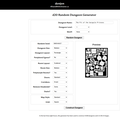
*
M20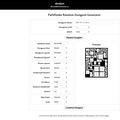
PF 1e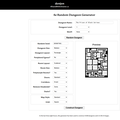
D&D 4e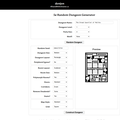
D&D 5e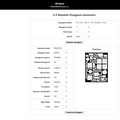
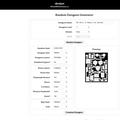
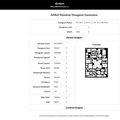
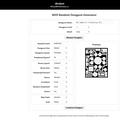
D&D 5.5Donjon's main dungeon generator exists in parallel versions tuned to specific rulesets: a system-agnostic fantasy version, plus dedicated AD&D, d20, Microlite20, Pathfinder, D&D 4e, D&D 5e, and D&D 5.5 variants. Each produces a top-down grid map alongside a room-by-room text key listing features, monsters, and traps drawn from that edition's tables. Configuration covers dungeon size, motif (for example caves vs. corridors), room layout density, and corridor style.
The structural design choice is one tool per ruleset rather than one tool with a system dropdown, which keeps the monster and trap tables faithful to each edition's source material. For groups playing anything other than the current edition, this is often the only generator that still respects the older rules.
Five Room Dungeons by System
*
AD&D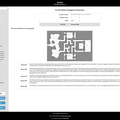
D&D 5e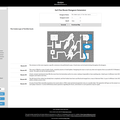
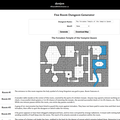
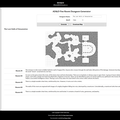
D&D 5.5Donjon also offers a separate generator built around Johnn Four's Five Room Dungeon format, an opinionated five-beat structure of entrance, puzzle, setback, climax, and reward. Like the full random generator, it exists in system-agnostic, AD&D, D&D 5e, and D&D 5.5 variants. The output is much shorter than a full random dungeon and is intended for one-session adventures rather than dungeon crawls.
This is the generator to reach for when the goal is a structured short adventure rather than an exploration sandbox. The five-room scaffold makes the output usable as a session plan rather than just a map.
The Endless Oubliette
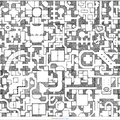
*The Endless Oubliette takes a different approach: rather than generating a discrete dungeon, it stitches together Dyson Logos's hand-drawn black-and-white geomorph tile set into an infinitely scrolling canvas. There is no configuration screen and no room key; the appeal is the exploration experience and the visual consistency of Dyson's instantly recognizable style.
It is the most stylistically distinctive generator in this set and the only one that produces a "dungeon" the player or GM can keep panning through indefinitely. Better suited to inspiration, mood-setting, and OSR-style exploration play than to a structured prepped encounter.
Kassoon
Visual 2D Dungeon Map

D&D 5eKassoon's Dungeon Map Generator produces a 2D visual grid map with configurable level, monster types, dungeon type, theme, size, and treasure. Each room on the map is paired with text describing encounters, traps, and loot, so the output functions as both a player-facing map and a GM-facing room key in one view.
Compared with Donjon's by-edition family, Kassoon's tool consolidates the configuration into a single options panel and leans into D&D 5e specifically. The visual style is more graphical and colour-saturated than Donjon's grayscale grid, and the integrated room descriptions skip the back-and-forth of cross-referencing a separate text key.
Modular DMG-Table Generator

D&D 5eKassoon's other dungeon tool is structurally different: it doesn't produce a map at all. Instead it rolls the DMG random dungeon tables piece by piece (dungeon start, passages, doors, chambers, stairs, contents, monsters, hazards, obstacles, traps, and tricks) and presents each result so a GM can stitch a dungeon together step by step at the table.
This is the option for GMs who want the DMG random dungeon procedure without the dice-rolling overhead. It is closer to a structured table-rolling assistant than to a map generator, and it pairs well with a sketched-out paper map that the GM is drawing as the party explores.
DunGen
VTT-Ready High-Resolution Maps
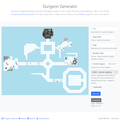
*DunGen produces high-resolution finished dungeon images intended to be dropped directly into a virtual tabletop. It offers eight visual themes (Original, Ice Temple, Stylized Gray, Paper White, Classic Blue, Virtual World, plus a Mask for image editors), configurable size from Tiny to Huge, adjustable tile resolution from 30 to 140 pixels, optional room furnishing with habitat selection, and multi-level dungeon support with staircases between floors.
The strongest differentiator is the export pipeline: DunGen ships dynamic lighting data for Roll20, wall data for Foundry VTT, and line-of-sight definitions for Fantasy Grounds Unity, so the map arrives in the VTT already configured for fog of war and lighting rather than requiring manual annotation. This is the option to choose when the dungeon needs to be battle-ready in a digital tabletop with no further setup.
Watabou
One Page Dungeon
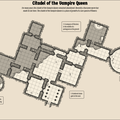
*One Page Dungeon produces a print-ready single-page output: a small dungeon map surrounded by numbered room descriptions, encounter notes, secret door annotations, and a generated dungeon title with a sentence or two of flavour text. Tag-based customization controls size, theme, and layout style, and multiple visual styles are available.
The opinionated one-page constraint is the point of the tool: everything a GM needs to run the dungeon is visible at once, which makes it ideal for low-prep one-shots and for situations where a dungeon needs to come together fully formed in a few minutes.
AwkwardTurtle
Wallet Dungeons (Print-and-Play)
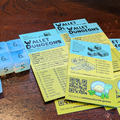
*Wallet Dungeons is the only entry here that is not a piece of software. It is a print-and-play, business-card-sized procedural dungeon generator: roll a handful of six-sided dice, arrange them according to simple rules based on each die's face value, and read off the resulting dungeon (rooms, corridors, and details) from tables printed on the card. Translations are available in French, Spanish, Italian, German, and Brazilian Portuguese.
The appeal is offline play, table-friendly use, and a very different ritual from a web generator. Reach for it when the use case is solo or in-person play without a laptop.
Choosing a Generator
The Donjon family is the most direct option for a full dungeon faithful to a specific edition's tables, with separate variants from AD&D through D&D 5.5 and a parallel set of Five Room Dungeon generators for shorter structured adventures. DunGen is the strongest choice when the map needs to drop into a virtual tabletop battle-ready, with lighting and walls pre-configured. Watabou's One Page Dungeon is the only tool here built around the single-printed-page constraint, which makes it the natural pick for a low-prep one-shot. Kassoon's modular generator is the closest digital equivalent to running the DMG random-dungeon procedure by hand: table rolls without a map. The Endless Oubliette is the only infinite-canvas option, useful for visual variety and exploration mood rather than for structured prep. And Wallet Dungeons stands alone in the analog category, for solo or in-person play without a laptop.