4 Encounter Generators Compared
A random encounter generator hands you a pre-rolled encounter. Press a button and the tool returns a list of monsters, sometimes with a suggested location or narrative hooks, ready to drop into the game. The output is less tailored than an encounter builder's, but the setup is faster: no party configuration, no XP math, and no bestiary search.
Generators in this comparison fall into two rough styles. Monster rolls, Donjon's specialty, pull random creatures from a bestiary filtered by encounter level and terrain. Idea prompts, Kassoon's specialty, produce prose-style setups with locations, antagonists, objectives, and twists. Kobold Fight Club includes a generator mode that draws from its builder's larger library for monster-roll output. If you want to construct a fight against a specific party's XP budget rather than roll one out, see Encounter Builders Compared. This comparison covers eighteen generators across three products.
Donjon
Random Monsters by System
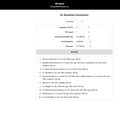
D&D 5e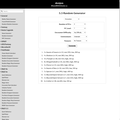
D&D 5.5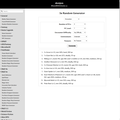
D&D 5e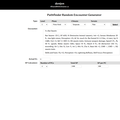
PF 1e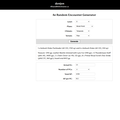
D&D 4e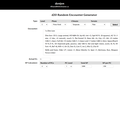
*
*Donjon runs a family of near-identical random encounter generators, one per supported system. You pick an encounter level, typically the party's average level, and an environment or terrain (forest, plains, coastal, urban, underground, and so on), and the generator returns a list of monsters from that system's bestiary with CR and XP values. The logic is consistent across systems; only the monster database changes.
The D&D 5e Random Encounter Generator is the flagship. A parallel generator covers D&D 5.5, using the 2024 revision's monster list. A second 5e generator lives on Donjon's broader Random Generator page. It is functionally similar to the dedicated endpoint but embedded in Donjon's hub-style UI alongside other random generators. The Pathfinder generator covers the original Pathfinder, not PF2e. The D&D 4e generator covers the fourth-edition monster list. The d20 Encounter Generator pulls from the d20 SRD for system-agnostic d20-compatible games. The Fantasy Random Encounter Generator organizes output by location type and targets any fantasy setting not tied to a specific ruleset.
All of these produce plain-text monster lists. There is no difficulty calculation against a specific party, no saved encounters, and no account system. The appeal is breadth (no other product covers this many systems) and speed.
Sci-Fi and Licensed Settings
*
Alien
Alien
AlienDonjon also offers genre- and setting-specific encounter generators outside the fantasy bestiary. The SciFi Random Space Encounter Generator produces system-agnostic science fiction encounters for generic sci-fi RPGs. The three Alien RPG generators cover the three environments of that game's setting: colony-based encounters for civilized space, surface encounters for hostile worlds, and star system encounters for space travel. Each draws from Alien RPG's specific threat catalog. Output style matches the fantasy generators: plain-text lists keyed to the setting.
Kobold Fight Club
Random Encounters from a Large Library

D&D 5eKobold Fight Club's encounter generator is the same tool covered in the companion builders article operating in a different mode. Select party size and level, pick a difficulty threshold (Low, Moderate, or High) and a composition template like Boss, Boss with Minions, Duo, Trio, or Horde, then generate. The tool rolls a random encounter matching those constraints from the full Kobold Fight Club library, which includes official sources, third-party bestiaries like Tome of Beasts and Flee, Mortals!, and any custom monsters the user has imported.
The generator's output is editable in place (monster counts can be adjusted, creatures added or removed), so it doubles as a starting point for further manual building. Finished encounters export to Improved Initiative through the same button the builder uses. For D&D 5e DMs who want random-encounter convenience without giving up the library depth, this is the generator to use.
Kassoon
Encounter Idea Prompts
D&D 5e
D&D 5e
D&D 5e
D&D 5e
D&D 5eKassoon's encounter generators output prompt-style text rather than monster lists. The Encounter Ideas Generator produces a mix of mechanical setups and narrative stakes. A mechanical example: "Place six objectives around the map, mirrored so half are closer to the PCs and half are closer to the enemies; at the end of each round you earn one VP for each adjacent objective." A narrative example: "the PCs are defending from attack by diseased opponents; the enemies win if they manage to infect the PCs." Each generation shows two examples with a More link for additional rolls.
The Boss Fight Ideas Generator focuses on climactic fights: unique mechanics, multi-phase progression, environmental hazards, and memorable elements that separate a boss from standard combat. The Non-Combat Encounter Generator covers social interactions, exploration challenges, and role-play scenarios, useful for DMs whose campaigns are not all fighting. The Random Misadventures Generator produces dungeon events and complications that add friction during exploration without necessarily being full encounters. The Interesting Locations Generator outputs a location description with features and potential hooks, aimed at travel and exploration phases.
Output across all five is text only: no monsters, no stats, and no mechanical output beyond occasional suggested rules. These are best used as prompts that feed into whatever builder or homebrew the DM uses for the mechanical layer.
Wilderness Wandering Monster Checks

D&D 5eThe Random Wandering Monsters generator is the one monster-roll-style tool in Kassoon's generator suite, stylistically closer to Donjon's generators than to Kassoon's prompt-style idea generators. Rather than rolling a guaranteed encounter, the tool simulates the wandering-monster-check rhythm of a day in the wilderness: separate rolls for morning, afternoon, evening, and night, each with a chance of No Encounter. When an encounter does come up, it draws a monster by terrain type (Forest, Grasslands, Urban, Hills, Mountain, Coastal), weighted toward CR 2.
The tool's instructional text acknowledges the CR will not always match the party and suggests tuning monster counts rather than rerolling for CR. Built for wilderness travel sequences where the DM wants the dice-roll texture of "something might happen, or might not" rather than a guaranteed encounter each phase.
Choosing a Generator
Donjon covers the widest range of systems (D&D 5e, 5.5, 4e, Pathfinder, d20, plus sci-fi and Alien RPG) with a consistent pick-level-and-terrain workflow. If you are running any system other than D&D 5e, Donjon is often the only option. Kobold Fight Club is the D&D 5e choice when you want generator convenience on top of a larger library, plus composition templates like Boss or Horde that Donjon's generators do not offer.
Kassoon's idea generators fit DMs who want inspiration instead of monster lists: scene stakes, mission objectives, boss mechanics, non-combat setups. They produce prompts, not playable encounters, and work best combined with a tool from the companion builders article or a preferred monster source. Kassoon's Wandering Monsters generator handles the specific case of wilderness travel with day-rhythm encounter checks.