7 Encounter Builders Compared
An encounter builder is an interactive tool for constructing combat encounters against a party-specific XP budget. The DM sets party size and level, the tool calculates how much XP constitutes an easy, medium, or hard fight for that group, and as monsters are added from a searchable library the running difficulty updates in real time. The workflow is budget-first: you decide how hard the fight should be, then you spend XP assembling it to that target.
This differs from a random encounter generator, which rolls a pre-built encounter off a table rather than letting you construct one. Generators are faster and produce more serendipitous pairings; builders give tighter control over what the party actually fights. For random encounter generators, see Encounter Generators Compared. This comparison covers nine builders across seven products, split roughly between D&D 5e and Pathfinder 2e.
Kobold Fight Club
The Comprehensive 5e Choice
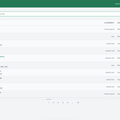
D&D 5eKobold Fight Club draws from the largest monster library of any builder on this list. Official sources include the Monster Manual, Volo's Guide to Monsters, Mordenkainen's Tome of Foes, the SRD, and numerous adventure-path supplements. Third-party bestiaries Tome of Beasts 1 through 3, MCDM's Flee, Mortals!, and Fifth Edition Foes are included. Users can also import custom monsters from Google Sheets, raw JSON files, or CSVs, covering anything not already in the library.
Three rulesets are selectable from the settings. D&D 5e 2014 uses the XP-based difficulty thresholds from the 2014 Dungeon Master's Guide. D&D 5e 2024 uses the simplified Low, Moderate, and High bands from the 2024 revision. MCDM's Flee, Mortals! uses a CR-budget approach designed for that book's monsters. When generating random encounters, the tool supports composition templates: Random, Boss, Boss with Minions, Duo, Trio, and Horde.
The interface is a three-pane layout: party and encounter on the left, monster browser in the middle, filters on the right. It stays dense but scannable. Full keyboard shortcuts cover every action. Encounters export directly to Improved Initiative for combat tracking. The site runs without third-party analytics or cookies.
D&D Beyond
Legacy Builder in the Official Ecosystem

D&D 5e D&D 5.5
D&D 5eD&D Beyond's standalone encounter builder is labeled beta and currently calculates difficulty using only 2014 rules. A banner at the top of the tool directs users to D&D Beyond Maps, a separate product, for 2024-rules calculations. The feature split reflects where D&D Beyond is investing its encounter-building effort: the standalone builder is the legacy path.
What the standalone builder still does better than anything else: monster search results include official D&D art thumbnails, and a per-monster difficulty column shows colored dots indicating how adding that monster would shift the encounter's difficulty before you add it. No other builder in this comparison includes either feature. The builder pulls from the monster library tied to the user's purchased digital sourcebooks, so homebrew and official content added to a D&D Beyond account are available here alongside the SRD.
The free tier saves up to six encounters. Hero and Master tiers save unlimited encounters. The tool's value is mostly for DMs already using D&D Beyond for digital books, character sheets, and campaign management, who want their encounter prep in the same place and are running 2014 rules.
Kassoon
Rules Calculator with Random Generation
D&D 5e
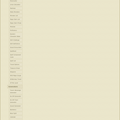
D&D 5.5Kassoon's encounter tools sit behind a visibly dated beige interface, but the feature set is deeper than the UI suggests. Party size and level set XP thresholds, which display live as you change the inputs. Monsters are added from a filterable table covering source, alignment, environment, size, type, CR range, AC range, and HP range. That's more filter dimensions than most other builders expose. A custom-name row at the top of the table lets you enter monsters the database doesn't know about.
Two separate endpoints cover the 2014 and 2024 rulesets. The 2014 version uses the four-tier Easy, Medium, Hard, and Deadly bands. The 2024 version uses Low, Moderate, and High. Both include a button that rolls a random encounter at a target difficulty, optionally respecting the current filter settings. Kassoon is the one builder in this group that ships random-encounter generation as a native feature rather than as a separate tool.
There is no persistent encounter saving and no account system. The tool is built for one-shot use: configure a party, check a fight, move on. The left sidebar links out to Kassoon's wider toolset: combat tracker, dice roller, battle maps, class creator, DM screen. That sometimes makes this a useful hub for a whole session of prep.
Improved Initiative
Minimal Staging for an Initiative Tracker
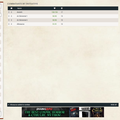
D&D 5eThe URL opens directly into Improved Initiative's combat tracker. The builder is the staging phase of that same interface: a creature picker on the left adds combatants to the initiative list in the middle, and a stat block panel opens on the right when a combatant is selected. Add enough creatures, start initiative, and the tracker runs the fight.
Feature set is minimal by comparison. The tool tracks total XP but does not calculate difficulty bands, bestiary filtering is limited to text search, and the XP-goal math that drives Kobold Fight Club or Kassoon is absent. Duplicate creatures auto-number, and encounters can be saved to reload later. A Patreon-backed Epic tier unlocks additional features.
Improved Initiative's main relevance in this comparison is that Kobold Fight Club has a "Send to Improved Initiative" button that exports a finished encounter directly into the tracker. For DMs using both tools, the builder phase happens in Kobold Fight Club and the play phase happens here.
Pathfinder 2e Dashboard
PF2e Combat Dashboard, Not Just a Builder
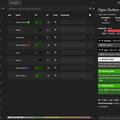
Pathfinder 2e Dashboard presents an encounter builder as one mode of a broader session-management tool. The interface opens on a multi-tab layout (encounter 1, encounter 2, and so on), so a DM can stage several fights in parallel for a session. Each tab combines builder and combat tracker in one view: party size and level at the top, creature search with filters on the left, an initiative list with HP, AC, condition, and comment columns in the middle. A colored difficulty gradient bar at the bottom of the screen updates as creatures are added, running from Trivial through Extreme with XP and gold-piece rewards labeled.
Creature filtering spans rarity, size, creature type, source, native environment, and level range. Elite and Weak variants adjust XP cost appropriately. Hovering a creature opens a full Pathfinder 2e stat block sourced from the Foundry VTT creature database, with clickable dice notation that rolls virtual dice in place. Duplicate creatures are auto-numbered.
A persistent search bar along the bottom of the dashboard looks up any PF2e rules content (spells, feats, features, actions, conditions, equipment) without leaving the page. That turns the tool into an in-session reference alongside its builder role. Encounters save to browser local storage and can be imported or exported as JSON.
Mimic Fight Club
PF2e with Proficiency-without-Level Support
Mimic Fight Club was one of the first web-based Pathfinder 2e encounter builders. The homepage now carries a banner redirecting visitors toward Prep n' Pray (the same developer's current product, covered below), but Mimic Fight Club continues to work and retains one feature Prep n' Pray does not currently match: a Proficiency without Level toggle for tables running that GM Core variant rule. Under the variant, monster math recalibrates to remove the assumed level bonus from proficiency checks, and Mimic Fight Club's XP budget updates accordingly.
The builder uses standard PF2e difficulty bands (Trivial, Low, Moderate, Severe, Extreme) and tracks XP per-player in addition to the party total. Creatures come from a filterable database covering level range, family, alignment, type, size, and traits. Weak, Normal, and Elite variant buttons per-creature adjust encounter XP. A random-encounter button generates a composition at a target difficulty, and custom creatures can be added inline through a dedicated row in the creature table.
The tool is primarily useful for PF2e groups using Proficiency without Level. For everyone else, the successor product is a more actively maintained choice.
Prep n' Pray
Campaign-Scoped PF2e Prep
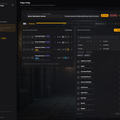
Prep n' Pray scopes encounters under named campaigns. An encounter always belongs to a specific campaign, carries a name and GM notes, and appears in a list next to that campaign's other encounters. The structure is closer to campaign-management software than to the one-shot builders on this list. You are not staging a fight to run immediately; you are filing a fight into a campaign where it lives alongside notes, characters, and treasure.
The creature library merges the official Pathfinder 2e bestiary with any custom creatures the user has added to their account, filterable by level range, type, size, rarity, traits, family, spellcaster status, and aura. Clicking a creature adds it as Normal, or as Weak or Elite to adjust XP. The running encounter shows a colored difficulty gradient with labeled threshold markers for Trivial, Low, Moderate, Severe, and Extreme at the top of the view. An inline stat block side panel includes Recall Knowledge DCs and links out to Archives of Nethys for full statblock context.
A Combat button on each encounter is currently locked behind account tier, indicating a paid in-app combat tracker is part of the product's trajectory. Prep n' Pray is the natural choice if you want PF2e encounter prep to sit alongside the rest of your campaign materials rather than in a separate tool.
Choosing an Encounter Builder
For D&D 5e with the most depth (largest library, three rulesets, encounter templates, no signup), Kobold Fight Club is the default choice. D&D Beyond's builder fits DMs already running 2014 rules inside D&D Beyond, with the tradeoff that it is a legacy tool the publisher is steering users away from. Kassoon works as a rules calculator and quick random-encounter roller when you do not need to save anything. Improved Initiative is the builder-tracker pair to reach for if you export your encounters from Kobold Fight Club.
For Pathfinder 2e, Pathfinder 2e Dashboard covers builder, tracker, and rules reference in one place and is the closest PF2e equivalent to Kobold Fight Club in scope. Mimic Fight Club is still the answer for tables using Proficiency without Level. Prep n' Pray fits DMs who want encounter prep scoped inside a broader campaign-management workflow.