6 Treasure Generators Compared
Treasure generators roll a full reward package (coins, gems, art objects, and magic items together) based on the encounter rules of a given system. They sit between magic item generators (which only produce items) and loot generators (which lean toward narrative or pocket-sized finds): when a published adventure says "the dragon's hoard," or a monster manual entry calls for "Treasure Type H," or the DMG asks you to roll on the CR 11–16 Hoard table, a treasure generator is the tool that does that lookup and the dice in one step.
The tools vary in system coverage, granularity, and configurability. Most target D&D 5e or its 2024 revision, but the category also spans AD&D, 4e, the d20 SRD, both editions of Pathfinder, and Four Against Darkness. Some tools roll a single hoard at a fixed CR band; others let you queue up several encounters at specific challenge ratings before generating a combined haul. A few generators expose only a CR selector, while others add knobs for campaign speed, treasure value (incidental/standard/double/triple), creature type, and which DMG or Ultimate Equipment item subtables to draw from.
Donjon
Hoards Across Editions
D&D 5e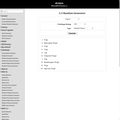
D&D 5.5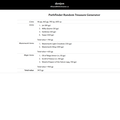
PF 1e
D&D 4e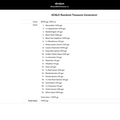
AD&D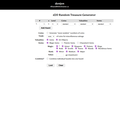
*Donjon offers a treasure generator for nearly every edition of D&D and its descendants. The 5e and 5.5 (2024) generators present a CR dropdown and an Individual/Hoard toggle, with optional variants that fold in magic items or salvage. The Pathfinder, 4e, AD&D, and d20 SRD versions share a different UI built around queuing: you add one or more "hoards" to a list (each with its own CR or 4e character level, treasure value tier, and creature type or AD&D treasure-type letter A–Z), then click Loot to roll the whole batch at once. The d20 generator goes furthest, with checkboxes for which subtables to draw from (gems, art objects, magic items, psionic items, even chaositech) and toggles for armor, weapons, potions, rings, rods, scrolls, staves, wands, and wondrous items.
Output is plain text: itemized lists of coin amounts, named gems with values, art object descriptions, and magic items with rarity and source page references. There are no card layouts, images, or wrapper text around the rolls. A "Combine?" checkbox merges multiple queued hoards into a single total, which is useful when generating treasure for a multi-encounter dungeon and tracking the aggregate. The Donjon generators are the most reliable choice when the system you're running isn't D&D 5e: they're the only treasure generators on this list that cover AD&D treasure types, 4e parcels, and the 3.5-era d20 SRD tables.
Small Coin Piles for 5e
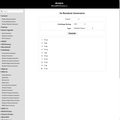
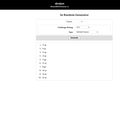
D&D 5eThe 5e Random Treasure Generator is technically the same page as the main 5e treasure generator above, but accessed through Donjon's combined Random Generator UI with the "Treasure" type selected. At low CRs with Individual Treasure selected, it returns a numbered list of ten small piles (a few copper, a handful of silver, the occasional gold or platinum coin) rather than a single hoard. This is the right mode when you want to scatter pocket change across multiple bandits or rats rather than generate one big reward.
The Thieves Guild
DMG Tables by CR Band
D&D 5e
D&D 5e
D&D 5e
D&D 5e
D&D 5e
D&D 5e
D&D 5e
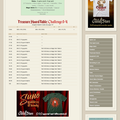
D&D 5eThe Thieves Guild splits the D&D 5e DMG's treasure tables across eight pages: four hoard tiers (CR 0–4, 5–10, 11–16, 17+) and four matching individual treasure tiers. Each page displays the full DMG table inline, then rolls a single result above it with the d100 roll shown alongside. Hoard results break out coins, gems with named varieties (Bloodstone, Chalcedony, Moonstone, Sardonyx, Citrine), and magic items pulled from the appropriate Magic Item Table A–I.
Rendering the full table next to the roll is the main thing distinguishing this tool from Donjon's 5e generator. If you want to see the probability distribution behind the result, or talk a player through why the hoard contains what it contains, the table is right there. The tradeoff is that there's no CR dropdown or value multiplier on a single page: switching CR bands or between individual and hoard means navigating to a different URL.
Kassoon
Configurable 5e and 2024 Hoards
D&D 5e
D&D 5.5Kassoon's 5e and 2024 treasure generators share a single dropdown that covers both individual and hoard treasure across all four CR bands. Beneath the type selector are percentage sliders for money, gems, and items (a way to dial down or boost any category) plus a toggle to include rolled magic items inline rather than as references. The 2024 edition adds a Theme selector with the new rulebook's categories: Arcana, Armaments, Implements, and Relics.
Alongside the generated treasure, the page also rolls a small block of pickpocket loot (a vial of ink, a fallen comrade's dog tags, a sling with bullets) and a one-line container description (such as treasure hidden in stone containers in a secret room). Several "campaign drop" categories are gated behind a premium Patreon tier. The percentage sliders are the most distinctive feature of these generators: most other tools in this comparison give you all-or-nothing checkboxes for treasure categories, while Kassoon lets you produce a hoard that's, say, 60% money and 20% gems.
DNDNames
Hoard and Single Creature Variants
D&D 5e
D&D 5eDNDNames provides two treasure generators that map directly onto the DMG's two table types. The Hoard Generator rolls on the treasure hoard tables across the four CR bands (0–4, 5–10, 11–16, 17+); the Single Creature Treasure Generator rolls on the individual treasure tables at the same four bands. Each page presents the four bands as buttons rather than a dropdown, so a single click produces a new roll at the chosen tier.
The generators themselves are stripped down, with no value modifiers, creature-type filter, or campaign speed setting, but each page is wrapped in extensive article-style content explaining what hoards are, how dragons accumulate them, and how players might spend the gold once they have it. That framing makes DNDNames better suited for DMs who want context alongside the rolls than for those who want a dense configuration panel.
Archives of Nethys
Pathfinder 1e with Deep Configuration
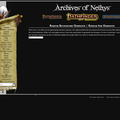
The Archives of Nethys Random Item Generator covers Pathfinder 1st Edition and is the most configurable treasure tool in this comparison. A top-level mode selector switches between Encounter Treasure, City Treasure, Kingdom Treasure, Treasure by Type, and Treasure by Value: five distinct generators sharing one page. Encounter Treasure exposes the full Pathfinder ruleset: average party level 1–20, campaign progression speed (Slow, Medium, Fast), treasure value (Incidental, Standard, Double, Triple), creature type (with options for both base and specialized variants like "Aberration (Cunning)" or "Construct (Guarding Treasure)"), and checkboxes for all nine Pathfinder treasure types A–I, from Coins through Lair Treasure to full Treasure Hoard.
City and Kingdom Treasure use settlement-scale parameters instead of party level, Treasure by Type rolls on a single chosen table, and Treasure by Value generates loot to match a specific gp budget. Output draws from the Pathfinder Core Rulebook and Ultimate Equipment. For anyone running PF1e, this is the canonical generator: it's on the same site as the official Pathfinder rules and item entries, and the items it produces link back to their Ultimate Equipment pages.
PSJMaps RPG Tools
Four Against Darkness Room Treasure
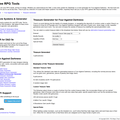
The PSJMaps treasure generator is the only tool in this category for a system other than D&D or Pathfinder. Four Against Darkness is a solo dungeon-delving game with its own compact treasure table on page 34 of the rulebook, and this generator rolls on that table directly. A ruleset selector switches between the standard table and a custom expanded table from the PSJMaps blog, which adds named gemstones (Bloodstone, Mithril Torc), bronze coin piles with their gp conversions, and specific jewelry items rather than abstract entries.
Beyond the table choice, the generator exposes a result modifier (−1 through +3), a quantity selector for rolling multiple rooms at once, and an Orc special rule that swaps any magic item results for larger gold piles, reflecting the in-fiction premise that orcs distrust magic. The tool is purpose-built for one game and doesn't try to scale beyond it, but for solo 4AD play it removes the need to flip back to the rulebook every time a room calls for treasure.
Choosing a Generator
For systems other than D&D 5e, the choice is largely made by availability: Donjon covers AD&D, 4e, the d20 SRD, and a streamlined Pathfinder 1e generator, the Archives of Nethys covers Pathfinder 1e with the deepest configuration of any tool in this comparison, and PSJMaps is the only option for Four Against Darkness. For D&D 5e and the 2024 revision, the four tools differ in how they expose the same DMG tables: The Thieves Guild displays the full table next to each roll and uses one URL per CR band, Kassoon adds percentage sliders for money/gems/items along with a 2024 Theme selector, DNDNames pairs simple CR-band buttons with extensive surrounding lore, and Donjon offers both a bulk-piles individual mode and a hoard mode with the most concise output of any 5e generator. DMs who want a single bookmark will get the most mileage from Kassoon or Donjon; DMs who want to teach a table how the math works will appreciate The Thieves Guild's inline tables.