3 Adventure Generators Compared
An adventure generator builds the raw material of a session or campaign: the premise, the villain, the twist, the place it all happens. The point is to give a game master a starting shape rather than a blank page. What they hand back varies a lot — some give a loose spark of an idea, others a structured skeleton to flesh out, a few something close to playable. They also differ in how much prose they wrap around that result and which kind of game they assume. So the question worth asking isn't which one is best, but which kind of output you're after.
Donjon
A Full Adventure Skeleton from the TSR Design Kit
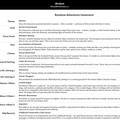
*Donjon's Random Adventure Generator lays out a complete adventure scaffold in a single labelled table, drawing on TSR's old Dungeon Master's Design Kit. Each load fills in around nineteen fields: a theme and goal, a story hook, the plot and its climax, general and specific settings, a master villain plus two minor villains, an ally, monster and character encounters, a deathtrap, a chase, an omen, the villain's secret weakness, a special condition, a moral quandary, a red herring, and a final cruel trick.
Every field comes with a paragraph explaining the trope instead of a bare keyword, so a result like a "Corruptor" villain or a "Chase to Ground" climax arrives with several sentences on how to use it. There are no dropdowns or options to lock in; you reroll the whole set by reloading the page, and the framing is classic high-fantasy. It is the most complete single skeleton among the free tools here, and it leans toward epic, multi-location plots over one-night sessions.
Sci-Fi Time-Travel Scenarios
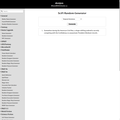
*The Temporal Adventure option lives inside Donjon's broader SciFi Random Generator: a single dropdown and a Generate button that you set to "Temporal Adventures." In place of a table of fields, it produces one free-form paragraph describing a time-travel scenario, covering an era or "somewhen," a meddling faction or individual, their scheme, and the disruption it causes.
Results vary widely: one run might give a wandering time traveller repairing a Soviet rocket program, another a far-future art collector laying a trap baited with AI-generated artwork. It generates one scenario at a time and is purely a prompt, with no stats, scenes, or structure, just a premise to build on. It suits sci-fi tables that want a strange hook, not a ready outline.
ChaosGen
One-Shot Outlines for 5e
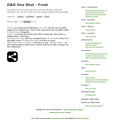
D&D 5eChaosGen's D&D One Shot generator writes a short prose outline, not a table: who the player characters are, the aim of the adventure, what it might involve, an opening scene, an early event, a fallback if play stalls, and an ending, sometimes with a reward or a "possible sequel." Key phrases are bolded so the shape of the session reads at a glance.
A theme dropdown (no theme, spooky, or frost) and a quantity selector (1, 5, 10, or 25) let you spit out a batch and cherry-pick. The output draws on 5e-flavoured monsters and Dungeon Master's Guide items, but stays at the level of a session premise, short of mapped rooms or stat blocks. It is free, with no login required.
Themed Horror Nights
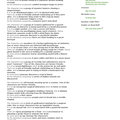
D&D 5eThe Spooky DnD One-Shot is a dedicated horror variant of the same 5e generator, assuming a single eventful evening or night, often under a full moon. Its outlines lean into atmosphere: a cursed shrine bordering the Shadowfell, ghouls preparing a feast, grim omens building as stars vanish from the sky. It favours escalating dread over a tidy reward.
It keeps the quantity selector but drops the theme dropdown, since the horror theme is baked in. It's the pick for a Halloween or one-night scare specifically, not a general adventure.
System-Neutral One-Shots
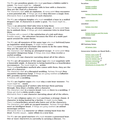
*The Fantasy One-Shot produces the same style of outline but without tying itself to any one ruleset, so it suits new games, unusual characters, and strange situations. Alongside the situation and events, it sometimes adds a mood cue (whimsical, deadly serious, relaxed) to colour how the session should feel.
Like the 5e version it offers a theme selector and a quantity selector. Because it avoids system-specific monsters and items, it is the more portable choice for tables that aren't playing 5e, at the cost of the edition-specific references the D&D generator includes.
Sci-Fi One-Shots
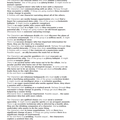
*Space and Sci-fi One Shots applies the one-shot outline structure to a futuristic setting: assassins defending a phasing dimension, actors foiling a polymorphing alien, bounties on wary automatons, with rewards like the deeds to a moon or galactic fame. Its skeleton (situation, characters, aim, opening, mid-event, stall-breaker, ending, possible sequel) matches the fantasy tools closely.
It has a quantity selector but no theme dropdown. For a science-fiction table it offers a more structured session plan than Donjon's single-paragraph temporal hook, though it stays system-neutral, not tuned to a specific sci-fi ruleset.
Kassoon
Complete Single-Page Dungeon Modules
D&D 5e
D&D 5.5Kassoon's Dungeon Module Generator aims higher than a premise: it advertises a complete dungeon module on a single, easy-to-read page, including detailed room descriptions, traps, puzzles, and encounters. A separate version targets the D&D 2024 rules, while the original covers earlier 5e. In practice these are the most "playable" outputs in this comparison, not idea prompts.
Both versions are gated behind Kassoon's premium subscription, so the generated module can't be viewed without an account; the site states the content requires premium and a login. That makes it the only paid option here, and the one whose full results couldn't be inspected directly, so the description reflects what the tool claims to produce.
Choosing an Adventure Generator
For a single rich scaffold to develop into a full adventure, Donjon's Random Adventure Generator gives the most structure for free, in a high-fantasy register. When you just need a quick, readable session premise, especially for a one-shot, ChaosGen's outline generators are the most convenient: a 5e version, a system-neutral fantasy version, a dedicated horror variant, and a sci-fi version, all able to batch out 25 ideas at once. Donjon's Temporal Adventure paragraph is the fast hook for a sci-fi table that wants a premise and nothing more. And if you'd rather start from something close to a ready-to-run dungeon than an idea to develop, Kassoon's Dungeon Module Generator is built for that, provided you're willing to pay for premium access.